Nitrate Fertilizer Demand Rises in Asia
- Share
- From
- Richase Group Limited
- publisher
- Richase Marketing
- Issue Time
- Jan 7,2026
Summary
Asia's nitrate fertilizer demand climbs as growers shift to efficient, chloride-safe N sources.

Asia's fertilizer buyers are moving decisively toward nitrate-based nitrogen, and Calcium Ammonium Nitrate is at the center of that shift. Across South and Southeast Asia, distributors report steady growth in CAN fertilizer orders as growers replace part of their urea volume with safer, more efficient nitrogen. This trend reflects both economic and regulatory pressure to raise fertilizer-use efficiency without raising chloride risk in sensitive soils.
Why Nitrate Fertilizer Demand Is Climbing
The core driver is yield stability. A nitrate fertilizer supplies nitrogen in the form roots absorb immediately, with none of the volatilization loss that can reach 30 to 50 percent for urea under hot, humid field conditions. In rice, vegetable, and plantation systems across the region, that recovered efficiency translates directly into more predictable tonnage per hectare. Importers are therefore sizing nitrate fertilizer contracts more conservatively but more frequently, smoothing inventory against price swings.
Calcium Ammonium Nitrate Leads the Transition
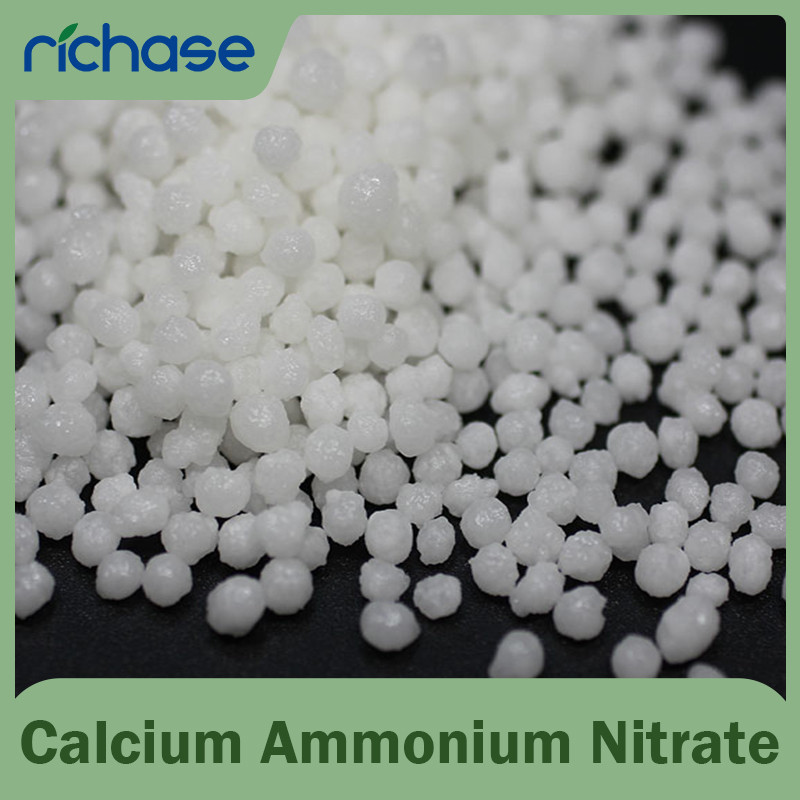
Calcium Ammonium Nitrate pairs immediately available nitrate nitrogen with a calcium amendment that improves soil structure in intensive cropping. Because the ammonium fraction is partly inhibited by the calcium carbonate coating, CAN releases nitrogen more gradually than straight nitrate while still avoiding the chloride found in many ammonium products. For growers managing saline or calcareous soils, CAN fertilizer has become the default upgrade from urea and ammonium sulphate.
Nitrogen Fertilizer Policy Supports the Move
Several governments in the region are tightening nitrogen fertilizer subsidy design to reward efficiency rather than sheer volume. Block subsidies on urea are being reconsidered, while controlled-release and nitrate products gain favorable treatment because they reduce runoff and greenhouse-gas emissions. That policy tilt is structural, not cyclical, and it reinforces multi-year agriculture demand for cleaner nitrogen sources.
The Asia Fertilizer Market Outlook
Within the Asia fertilizer market, nitrate volumes remain a small but fast-growing slice. Traders note that port throughput for bagged CAN has risen at secondary hubs, and blending plants are reformulating base mixes to include 10 to 20 percent nitrate nitrogen. Freight and energy costs still dominate short-term pricing, but the volume direction is clear: more nitrate, less straight urea.
Supply and Sourcing Shifts
Buyers are diversifying origin to manage lead time. Traditional European and North African CAN supply is being complemented by Chinese export volumes, where integrated nitrate producers offer competitive CFR terms to South and Southeast Asian ports. Importers now ask for consistent analysis certificates and reliable bag integrity, since humidity during monsoon transit remains the main quality risk.
What Growers Are Changing in Practice
In field crops, the typical adjustment is a side-dress of CAN at tillering and again at panicle initiation, replacing one of two urea passes. In vegetables, CAN enters the fertigation tank as a standing nitrogen source. The result growers cite most often is more uniform plant development and fewer late-season lodging events linked to over-fast urea flush.
Quality and Documentation Expectations
As nitrate fertilizer volumes grow, so does buyer scrutiny. Importers increasingly require SGS or equivalent verification of nitrogen and calcium content, moisture, and anti-caking performance. Suppliers that provide batch-level traceability and stable granule size protect their customers against clogging in automated spreaders and dosing pumps.
Regional Hotspots
Demand is strongest where high-value horticulture meets water constraints: coastal India, the Mekong Delta, parts of Indonesia and the Philippines. In these zones, the premium for efficient, chloride-safe nitrogen is justified by crop value, and CAN fertilizer adoption is furthest advanced.
Outlook for the Year
Barring a sharp correction in energy prices, agriculture demand for nitrate nitrogen in Asia should keep expanding as efficiency rules and horticulture area both grow. CAN is positioned to capture the largest share of that incremental nitrate volume because it balances performance, safety, and cost better than alternatives.
Conclusion
The shift toward Calcium Ammonium Nitrate across Asia is a structural rebalancing of the nitrogen fertilizer basket, driven by efficiency, soil safety, and policy. Suppliers with documented quality and reliable logistics are best placed to serve the next phase of the Asia fertilizer market.