The Importance of Steel Balls in Grinding Operations BY:Danny
- Share
- publisher
- 、Saskia
- Issue Time
- Oct 7,2025
Summary
Grinding steel balls are pivotal in mineral processing, with material selection (cast/forged), filling ratio optimization, and size grading directly impacting efficiency.
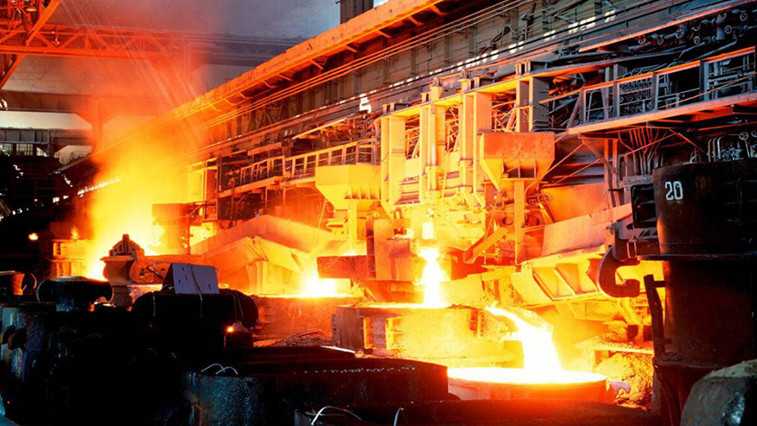
The Importance of Steel Balls in Grinding Operations BY:Danny
For mineral processing enterprises, steel balls and liners are major consumables, accounting for over 80% of total consumables, with steel balls making up over 80% of that. With the rapid development of my country's mining, cement, and power industries, the demand for steel balls is increasing year by year.
Grinding is an indispensable part of the mineral processing technology in mineral processing plants, playing a crucial role in the technical indicators of the process. The efficiency of grinding is directly related to the economic benefits of mineral processing. Steel balls, as the implementers and energy transmitters of grinding operations, have a significant impact on the process.
The following is a brief discussion of the impact of steel ball material, filling rate, size, and proportion on grinding operations.
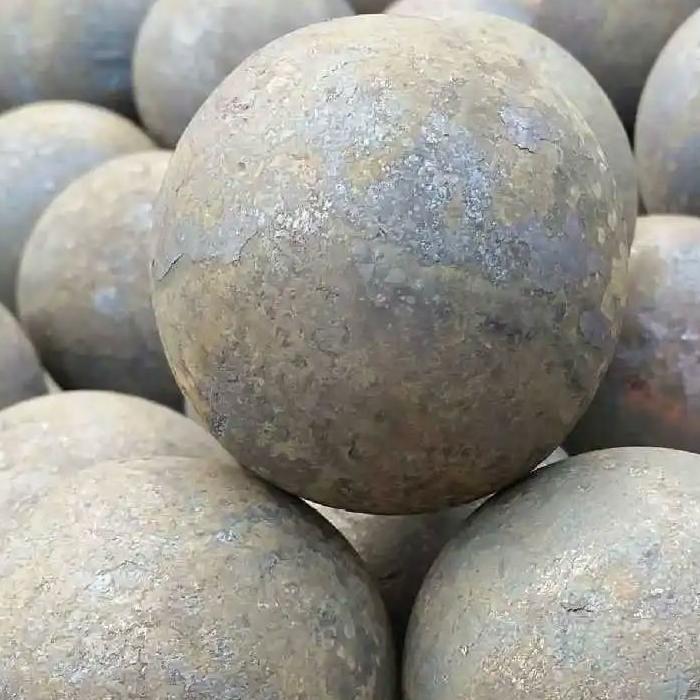
1. Steel Ball Material Different manufacturing processes determine the quality of steel balls. The quality of steel balls affects both productivity and ball consumption, thus influencing the cost of mineral processing. Currently, most ore dressing plants use two main types of steel balls: cast steel balls and forged steel balls. Cast steel balls can be further divided into three categories: low-chromium steel balls, high-chromium steel balls, and high-alloy steel balls. The general production process is: raw materials → heating and melting → casting in steel molds → demolding and grinding → quenching → tempering → inspection and packaging. The general production process for forged steel balls is: raw materials → blanking → heating in an induction furnace → forging into balls → quenching → tempering → inspection and packaging.
Cast steel balls can be produced using scrap materials, while forged steel balls must use qualified bar stock, so the raw material cost for forged steel balls is higher. However, comparing the mechanical properties of cast and forged steel balls , it can be seen that forged steel balls have better impact toughness and breakage rate than cast steel balls. In actual use, the breakage rate of forged steel balls is also lower than that of cast steel balls.
The principles for selecting steel balls are high hardness, non-breakability, and high cost-effectiveness. Especially regarding cost-effectiveness, cheaper isn't always better. If wear is rapid and the crushing rate is high, the indirect costs caused by wear and crushing will far outweigh the direct benefits of a low price, resulting in lower overall efficiency. Therefore, it is crucial to select the appropriate steel ball material based on the mill specifications and ore properties.
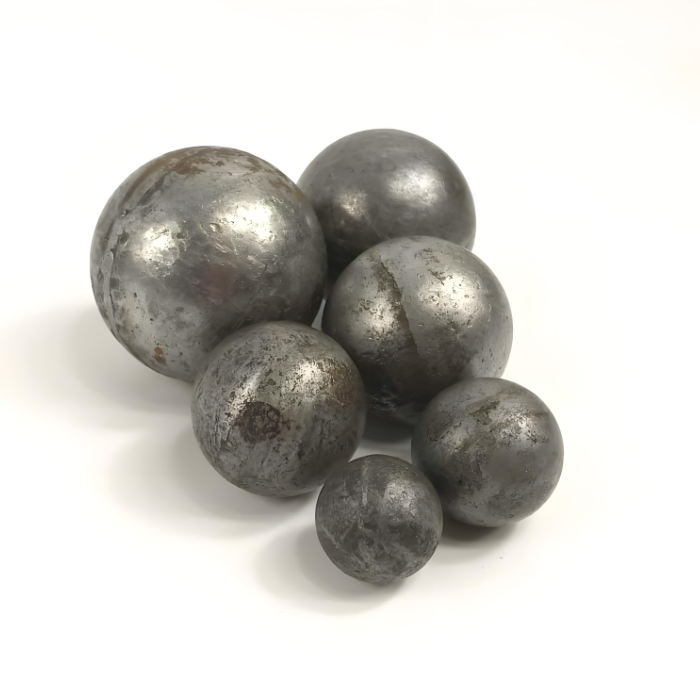
2. Steel Ball Filling Ratio The steel ball filling ratio within the mill determines the strength of the grinding action. Intuitively, more balls mean more impacts and a stronger grinding effect; conversely, fewer balls mean fewer impacts and a weaker grinding effect. However, an excessively low filling ratio leads to insufficient impact energy, failing to effectively crush and grind the ore. Conversely, an excessively high filling ratio results in a confined internal space, causing excessive contact between materials and reducing impact efficiency.
Therefore, a suitable steel ball filling ratio must be selected to ensure mill efficiency. When grinding conditions, including mill size, grinding concentration, and rotational speed, are constant, the filling ratio depends on the ore particle size and grinding difficulty. As the ore properties change, the steel ball filling ratio must also change accordingly. The standard for determining whether a filling rate is appropriate is the mill's productivity. The optimal filling rate is found through experimentation, corresponding to the maximum productivity.
For example, an Indonesian copper-gold mine increased its steel ball filling rate from 14% to 18%, resulting in a 5%–10% increase in mill throughput. Currently, the mine's steel ball filling rate is stable at 16%–18%. However, increasing the steel ball filling rate will coarsen the product particle size. This should be considered during system optimization, as coarser particle size from a semi-autogenous mill will increase the grinding load on subsequent ball mills.
Richase Group understands the diverse needs of its clients. Our steel balls products, including high-quality steel balls, are designed to deliver superior performance and reliability in your flotation applications.
[Platform release disclaimer]
This platform part of the article picture source or adapted from the Internet, the main purpose is to share information, so that more people get the information they need, the copyright belongs to the original author, such as infringement of your rights and interests or copyrights, please let us know in time, we will be deleted within 24 hours!