Potassium Nitrate for Crops: Buyer Guide
- Share
- publisher
- Richase Marketing
- Issue Time
- Jan 2,2026
Summary
Richase Potassium Nitrate boosts fruit quality with chloride-free N-K nutrition.

When your crop program depends on both nitrogen and potassium arriving together, Potassium Nitrate is the input that delivers them in one clean, chloride-free package. For international buyers sourcing from China, KNO3 has become the preferred nitrate fertilizer for fruit, vegetables, tobacco, and protected cultivation. This buyer guide explains what potassium nitrate does in the plant, why the chloride-free profile matters, how to specify a grade that performs, and how to avoid the common purchasing mistakes that waste money.
What Potassium Nitrate Actually Delivers
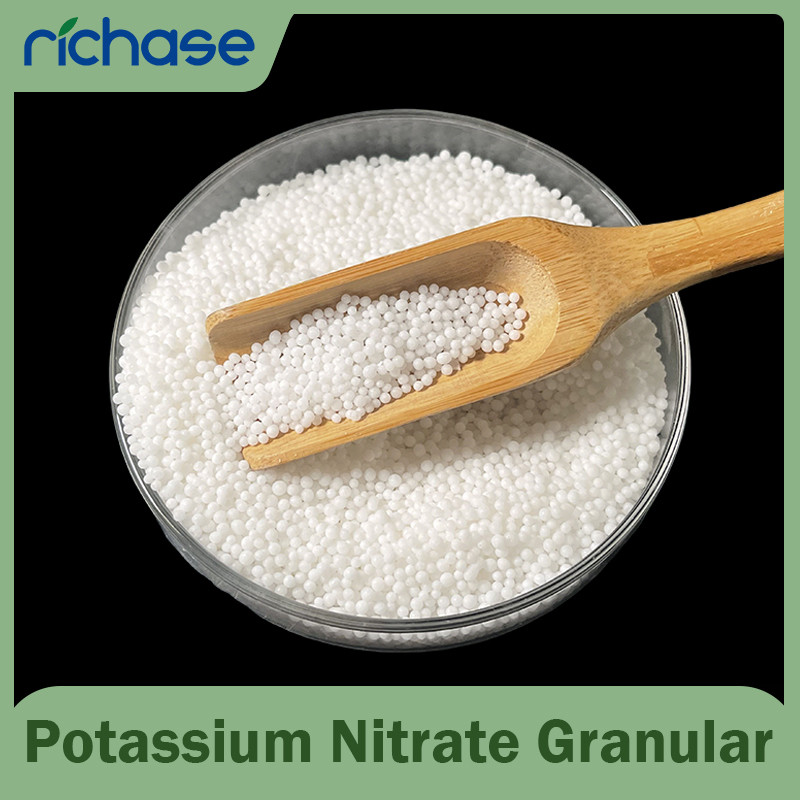
Potassium Nitrate (KNO3) is a fully water-soluble compound carrying 13.8 percent nitrate nitrogen and 46.6 percent potassium oxide. Unlike ammonium or urea nitrogen, the nitrate form is taken up immediately by roots with no conversion step, so growth response is fast and predictable. The potassium supports sugar transport, fruit sizing, and stress tolerance. Used together, the two nutrients raise both yield and quality, which is why KNO3 fertilizer sits at the core of premium crop programs.
Why Chloride-Free Matters for Sensitive Crops
Many nitrogen fertilizers carry chloride, which burns the roots of chloride-sensitive crops such as strawberries, citrus, tobacco, and greenhouse vegetables. Potassium Nitrate is naturally chloride-free, so it feeds these high-value crops without the salt stress that lowers yield and quality. Choosing a chloride free fertilizer is therefore the first rule for sensitive crops, and KNO3 is the standard that meets it. For tobacco, the chlorine-free formula improves leaf thickness and combustion; for fruit, it raises Brix and color. This single property is why buyers pay a premium for KNO3 over cheaper chlorinated options.
Nitrate Nitrogen Versus Other Forms
The speed of nitrate nitrogen is the practical advantage. Urea must convert to ammonium then nitrate in the soil, losing 30 to 50 percent to volatilization and leaching along the way. Ammonium nitrate is faster but still chlorided in many grades. KNO3 skips the conversion and the chloride, giving the plant usable nitrogen within hours of application. In drip and foliar systems, that speed translates directly into greener leaves and firmer fruit.
Potassium Nitrate for Fruit and Vegetables
In fruit crops, this fruit fertilizer approach applies Potassium Nitrate four weeks before harvest to lift sugar content, uniform color, and shelf life in grapes, citrus, and tomatoes. The potassium drives sucrose into the fruit while the nitrate sustains late-season leaf function. Growers routinely report one to two degrees Brix improvement, which directly affects market grade and price. For vegetables under cover, the low salt index prevents emitter clogging in recirculating systems.
Greenhouse and Hydroponic Applications
Controlled-environment agriculture depends on precise, residue-free nutrition, and greenhouse fertilization with KNO3 fits perfectly. Its 100 percent solubility and low salinity index keep nutrient tanks clean and roots unburned. In NFT and DFT systems, KNO3 supplies balanced N and K without the chloride that accumulates in recirculating water. Many greenhouse operators run KNO3 as a standing ingredient in their base recipe rather than a periodic top-dress.
Choosing the Right Grade and Granule
Grade follows your equipment. Granular KNO3 (2 to 4 mm) is built for mechanical spreaders and bulk blending, with crush strength above industry standard so it survives stacking and transport. Prilled KNO3 dissolves in about 90 seconds, ideal for fertigation and foliar sprays. When you request a quote, state purity, granule size, chloride content, and whether you need OEM packing. Always ask for third-party certificates so you know the analysis matches the invoice.
Application Rates That Pay Off
Dosing depends on crop and system, but standard guidance is useful. For open-field fruit, side-dress 20 kg per mu four weeks before harvest. In fertigation, run 2 to 5 kg per hectare per pass through the drip line. For foliar correction of deficiency, a 0.5 to 1 percent solution applied at fruit set is common. Start with a small test strip, measure response, then scale once you see sugar and color improvement.
Sourcing From a Consistent Supplier
Not all KNO3 is equal. Origin, purity, and anticaking treatment decide whether the product flows through your equipment and stores through a humid season. Because nitrate fertilizers face tightening safety and transport regulation, documentation and port access matter. A supplier that provides batch certificates, OEM packing, and ships from a port near the mine protects both your quality and your lead time.
How Richase Supports Global Growers
Richase Group Limited supplies Potassium Nitrate granular and prilled grades to agriculture customers across Africa, Latin America, Europe, and Southeast Asia. Our KNO3 fertilizer inputs are backed by ISO, SGS, CIQ, Intertek, and CCIC documentation, with direct access to Tianjin, Shanghai, and Qingdao ports. You can review the technical sheet, request a sample, and confirm specifications on the product page: Potassium Nitrate Granular.
Key Takeaways for Procurement Teams
- Potassium Nitrate delivers fast nitrate nitrogen plus potassium in one chloride-free input.
- Chloride-free chemistry protects sensitive fruit, tobacco, and greenhouse crops.
- Nitrate nitrogen beats urea and ammonium on speed and recovered efficiency.
- Specify purity, granule size, chloride, and certification, not just price per ton.
- Choose a documented, traceable supplier to protect quality and lead time.
Frequently Asked Questions
Can potassium nitrate be mixed with other fertilizers? Yes, it blends cleanly with most phosphate and micronutrient fertilizers and stays soluble in tank mixes. Is it safe for organic programs? Ask your supplier for the certification relevant to your region, since KNO3 is a synthetic mineral fertilizer. How should I store it? Keep it dry below 60 percent humidity; modern low-hygroscopicity grades resist caking even in tropical ports.
Conclusion
Richase Group Limited understands that different growers face different soil and regulatory challenges, and our Potassium Nitrate products come from a strict quality-control system that ensures consistent purity, solubility, and safety in every batch, helping customers raise fruit quality and protect long-term yield.